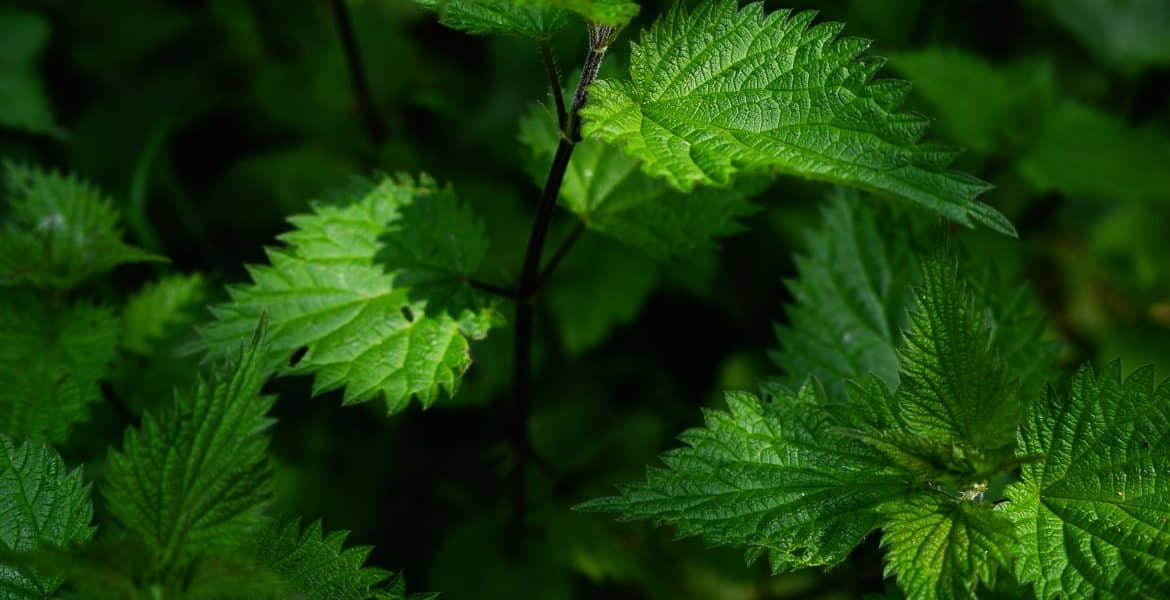
Every spring, millions of people wage the same losing battle: watery eyes, relentless sneezing, a nose that simply will not cooperate. And nestled in hedgerows and meadows across the world, the plant responsible for one of nature’s most infamous stings may offer a surprising remedy.
Stinging nettle, Urtica dioica, has a long history in herbal medicine, dating back to ancient Greece. Today, a growing body of peer-reviewed research is catching up with that tradition, revealing how processed nettle extracts may help calm the very immune responses that make allergy season so miserable.
First, the Irony
Before we explore the remedy, the paradox deserves acknowledgment. Stinging nettle is itself a source of allergic and irritant reactions. The hair-like structures on its leaves, called trichomes, release a cocktail of histamine, formic acid, and acetylcholine on contact, causing the well-known burning rash.1 And its airborne pollen can trigger classic allergy symptoms in sensitive individuals, including rhinitis and conjunctivitis.2
So how does a plant that causes reactions also relieve them? The answer lies in the difference between the raw plant and processed extracts, and in the surprisingly complex pharmacology of Urtica dioica.
What Happens During a Pollen Allergy
Allergic rhinitis, commonly called hay fever, is an IgE-mediated inflammatory disorder of the nasal mucosa. When a sensitized individual inhales pollen, the immune system identifies it as a threat and mounts a response: IgE antibodies bind to mast cells and basophils, triggering the release of histamine and other pro-inflammatory mediators. The result is the familiar cascade of nasal congestion, rhinorrhea, sneezing, and itching that affects at least 20% of the global population.3
“The role of oxidants and oxidative stress in the pathophysiology of allergic rhinitis has been confirmed in several studies.”— BAKHSHAEE ET AL., IRANIAN JOURNAL OF PHARMACEUTICAL RESEARCH, 2017
It is precisely this inflammatory cascade that nettle extract appears to interrupt through multiple, well-characterized biochemical pathways.
The Science: How Nettle Works
A landmark in vitro study published in Phytotherapy Research (Roschek et al., 2009) was the first to provide a mechanistic understanding of nettle’s anti-allergy action. Using DART TOF-MS analysis, the researchers identified specific bioactive compounds in nettle extract and mapped their pharmacological effects:4
H₁ Receptor Antagonism: Nettle extract acts as an antagonist and negative agonist at the Histamine-1 receptor, the same receptor targeted by conventional antihistamines.
Mast Cell Stabilization: The extract inhibits mast cell tryptase, preventing degranulation and the resulting flood of pro-inflammatory mediators.
COX Enzyme Inhibition: Nettle inhibits Cyclooxygenase-1, Cyclooxygenase-2, and Hematopoietic Prostaglandin D₂ synthase, central enzymes in inflammatory prostaglandin pathways.
Immune Modulation: Nettle extracts modulate the activity of immune cells involved in allergic responses, helping to calm the overactive immune system at its root.
The anti-inflammatory activity of nettle is further supported by its rich content of flavonoids particularly quercetin and rutin. Quercetin, a well-studied polyphenol, inhibits the production and release of histamine by stabilizing mast cell membranes, reduces pro-inflammatory cytokines and leukotrienes, suppresses interleukin IL-4 production, and can improve the Th1/Th2 immune balance that is characteristically disrupted in allergy sufferers.5
Quercetin: Nettle’s Most Potent Ally
A 2024 comprehensive review in ScienceDirect confirmed that quercetin’s beneficial effects include a decrease in pro-inflammatory cytokines and leukotrienes, inhibition of histamine release, suppression of IL-4 production, and reduction in antigen-specific IgE antibodies.6 The same review noted quercetin’s potential across a range of allergic conditions, including allergic rhinitis, atopic dermatitis, conjunctivitis, and asthma.
Because stinging nettle leaf is a natural source of quercetin, it delivers these benefits alongside its own direct anti-allergic mechanisms, making it a multi-action botanical rather than a single compound supplement.
Clinical Evidence: What the Trials Show
SUMMARY OF KEY CLINICAL STUDIES
RCT · 2017
Bakhshaee et al. published a randomized, double-blind, placebo-controlled trial in the Iranian Journal of Pharmaceutical Research. Of 74 allergic rhinitis patients with confirmed positive skin prick tests, those receiving 150 mg of Urtica dioica root extract for one month showed a statistically significant reduction in nasal eosinophil count (p < .01), a key objective marker of allergic inflammation, compared to placebo.3
RCT · 1990
Mittman published a randomized, double-blind study in Planta Medica comparing freeze-dried Urtica dioica to a placebo in 98 allergic rhinitis patients. After one week, nettle was rated superior to placebo in global assessments, with participants reporting meaningful relief from sneezing and itching.7
IN VITRO · 2009
Roschek et al., publishing in Phytotherapy Research, demonstrated that nettle extract inhibits multiple key inflammatory targets simultaneously: the H₁ histamine receptor, mast cell tryptase, COX-1, COX-2, and HPGDS, providing, as the authors noted, “for the first time, a mechanistic understanding of the role of nettle extracts in reducing allergic and other inflammatory responses.”4
REVIEW · 2022
A nutritional composition review in PMC/MDPI Nutrients confirmed that the root extract of Urtica dioica showed efficacy in treating allergic rhinitis across multiple trials, and noted that the flavonoid compounds rutin and quercetin present in nettle leaves contribute additional anti-inflammatory and antioxidant properties.8
Taken together, the evidence paints a consistent picture: nettle extract, especially in root or freeze-dried leaf form, can reduce both the subjective experience of allergy symptoms and objective biological markers of inflammation. That said, researchers uniformly note the need for larger, longer-duration trials before nettle can be recommended as a standalone first-line treatment.
Safe Use and Practical Guidance
The keyword when it comes to nettle as a remedy is processed. Raw or fresh nettle will sting. But once dried, freeze-dried, steamed, or extracted, the irritating compounds in the trichomes are deactivated, and the plant becomes safe for consumption. The most common supplemental forms are:
Freeze-dried leaf capsules, the form used in Mittman’s 1990 clinical trial, are rated at roughly 300 mg twice daily for allergy support. Root extract tablets, used in the 2017 Bakhshaee trial at 150 mg daily. Nettle tea is a gentler option, though less concentrated than capsule forms.
Important Caveats
Stinging nettle pollen is itself an aeroallergen and can trigger rhinitis and asthma in sensitized individuals.2 If you are highly reactive to pollen generally, consult an allergist before trying nettle supplements. Nettle may also interact with blood thinners, diuretics, and diabetes medications. As with all supplements, speak with your healthcare provider before incorporating nettle into your routine, especially if you are pregnant, nursing, or managing a chronic condition.
The Bottom Line
There is something quietly compelling about a plant that has irritated human skin for millennia, quietly proving itself useful in the laboratory and the clinic. The science behind stinging nettle’s anti-allergy activity is no longer merely folk wisdom. It rests on mechanistic in vitro data, randomized controlled trials, and a growing understanding of its bioactive compounds, particularly quercetin.
For those seeking a natural complement to conventional allergy management, processed nettle extract represents one of the better-evidenced botanical options available. It is not a replacement for antihistamines or immunotherapy in severe cases, but for mild to moderate seasonal symptoms, the humble stinging nettle may be worth a second look.
Just wear gloves when you pick it.
Note: This article is for informational purposes only and does not constitute medical advice. Consult a qualified healthcare provider before starting any supplement.
REFERENCES
- Pollen.com. (2026). Nettle (Urtica) Genus Level Details and Allergy Info. Retrieved from https://www.pollen.com/research/genus/urtica
- Thibaudon, M., et al. (2016). Urtica dioica pollen allergy: Clinical, biological, and allergomics analysis. Annals of Allergy, Asthma & Immunology, 117(5). https://doi.org/10.1016/j.anai.2016.08.014
- Bakhshaee, M., et al. (2017). Efficacy of supportive therapy of allergic rhinitis by stinging nettle (Urtica dioica) root extract: A randomized, double-blind, placebo-controlled, clinical trial. Iranian Journal of Pharmaceutical Research, 16(Suppl), 112–118. PMC5963652.
- Roschek, B., et al. (2009). Nettle extract (Urtica dioica) affects key receptors and enzymes associated with allergic rhinitis. Phytotherapy Research, 23(7), 920–926. https://doi.org/10.1002/ptr.2763
- Mlcek, J., et al. (2016). Quercetin and its anti-allergic immune response. Molecules, 21(5), 623. PMC6273625. https://doi.org/10.3390/molecules21050623
- Mahdavi, R., et al. (2024). Quercetin: A promising functional food additive against allergic diseases. A comprehensive and mechanistic review. Journal of Functional Foods, 116, 106156. https://doi.org/10.1016/j.jff.2024.106156
- Mittman, P. (1990). Randomized, double-blind study of freeze-dried Urtica dioica in the treatment of allergic rhinitis. Planta Medica, 56(1), 44–47. https://doi.org/10.1055/s-2006-960881
- Dhouibi, R., et al. (2022). Stinging nettle (Urtica dioica L.): Nutritional composition, bioactive compounds, and food functional properties. Nutrients, 14(17), 3564. PMC9413031. https://doi.org/10.3390/nu14173564
